Why Beautiful Branding Doesn’t Automatically Equal Premium Positioning
Emma Griffin is a UK-based website copywriter and hook strategist, specialising in messaging that sells out your services without underselling your expertise. Many creative entrepreneurs have a lot of strings to their bow. They're all super valuable, but this multi-passionate approach can land them in hot water when it comes to explaining what they do. Emma helps you find that single, memorable "hook" to tie together your work in a way people finally understand.
As a copywriter and messaging strategist, I know that the most successful rebrands take into account both copy and design. And they don’t leave copy as an afterthought. The TL;DR of this blog post is basically this: Design and copy are a powerful pairing, but messaging is where your business finds its voice – not your fonts or colour palette. Great visuals get you noticed. But words are what worm into people’s minds, making them remember and reach for you when the time comes. They’re the part that sells and signifies true expertise. Copy should always come before design, because it's the structural scaffolding your visuals are built around. That’s why the most effective rebrands follow this order: Brand Identity → Messaging → Copywriting → Website Design → Website Build.
Here’s my two cents on why a beautiful brand alone is not enough in 2026 (and why it never was).
Most service businesses are overdesigned and underthought.
Thanks to Canva and easy-to-use tools like Squarespace's drag-and-drop function, the internet has never looked better. (Phew, because the 2010s era of online business was nattttt delivering on the aesthetics front.) Open a tab, and you'll find beautiful websites in carefully curated colour palettes, matched with thoughtful branding and pro photography. Lovely.
Yet somehow, everything feels strangely familiar. Or rather, it sounds like something you've heard a version of 100 times before.
Scroll through ten websites in the same industry and you'll likely find ten versions of the same promises:
"Helping ambitious women thrive."
"I help heart-led coaches market with soul."
"Design a life you love."
The visuals are different. The logos are bespoke. But the messaging is identical. (Excuse me while I stifle a yawn.) Thanks to the influx of AI-generated slop, take away the branding, and those words and products could belong to literally anyone selling a similar service. And that makes a buyer’s decision tricky. Because… what are you actually giving them to go off?
The crux of the website conversionconundrum is this: someone may fall in love with your visuals, but if they can’t understand why they should choose you, they’ll keep searching until someone can answer that question for them.
Paying for messaging strategy and hiring a professional website copywriter ensures that question is answered, instantly. The moment they land in your corner of the internet.

A brand can look premium and still feel cheap
Maybe you've personally spent a lot of money on a stunning brand identity and are scratching your head about why your sales haven't budged since the rebrand? It’s not the brand designer’s fault.
Ever noticed how a brand can look super luxurious, but feel cheap? I call this the Boardwalk Gucci Bag effect! As in: your brand is Gucci. Your design is Guccie. But, right now, your website copy is giving knock-off-bag-bought-on-a-boardwalk energy. It looks beautiful, but hold it under a microscope and suddenly you’ll see the whole package is not quite as considered as you’d first thought.
Here's why: visuals are memorable and powerful – but positioning doesn't come from visual language alone. It comes from your actual language. Because the way you talk about your work is a crucial part of the positioning process – telling people whether what you do is for them or not, and choosing which part of the market (and budget) your work will occupy.
It’s in the stories you tell to explain your expertise. The language someone repeats when recommending you. The reason they choose you over someone else.
And, sure. Design can signal you as a premium or luxury option. But a significant part of your sales positioning happens through words.
Copy should lead the charge, not be an afterthought
Look, I know that a messaging strategy Google Doc is not as exciting as a beautifully designed moodboard of typography, brand colours, accents and imagery. As a copywriter and messaging strategist, I’ve made my peace with being the less glamorous assistant when it comes to getting your brand known and booked.
But getting your messaging nailed from the start of the process – instead of panic-filling a Google Doc with ChatGPT copy while your web designer chases you for content – isn't optional. It's essential if you're truly ready to grow and show up as the real deal in your industry.
Having a messaging strategy built out, based on your offers, your customer profile, your expertise, your marketing makes everything so. much. easier.
Need to promote an offer this week on social media? Great, it’s all there to crib from in your master messaging document. Need to write website copy now that your brand identity is done and you’re moving onto the design phase? The core guidelines are all there for you already – you just need to fill in the rest.
Think of it like this: if brand guidelines give you your visual goalposts, messaging strategy gives you your verbal ones.
Why copywriting and brand design go together like Bonnie and Clyde
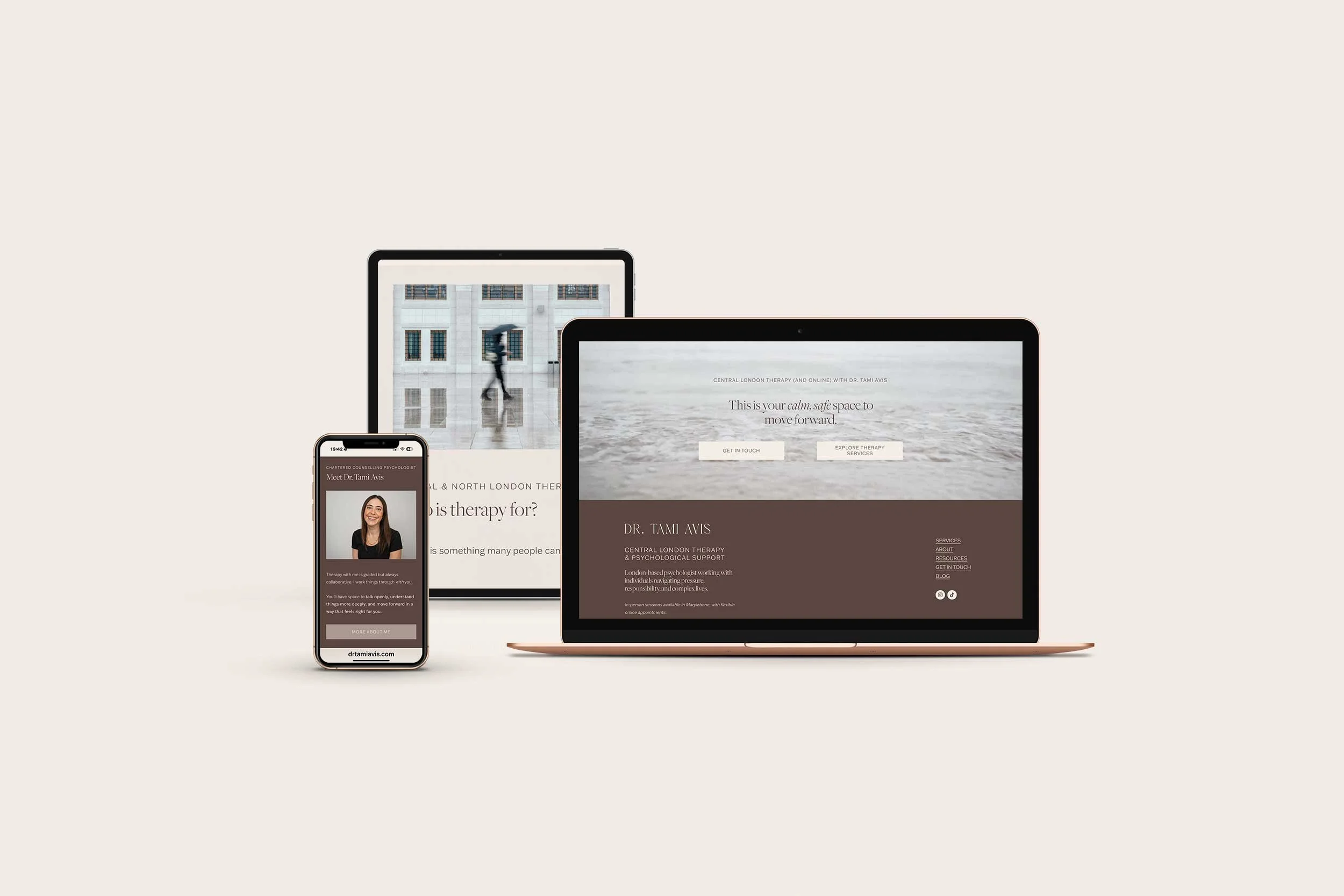
Design and copy are a truly powerful pairing. You only need to look at some of the most famous print advertising from the last 60 years to see that. Whether it’s a 1950s advert for Brylcream, or a colourful billboard for Coca Cola, visual branding and verbal positioning have a wonderfully symbiotic relationship – feeding each other, mirroring each other and improving the impact of each one.
When there's a mismatch between the two, consumer trust is lost – especially when it comes to your website:
Weak design with exceptional copy? You can’t quite place it, but something feels off.
Beautiful design with generic copy that could belong to any business? It’s gorgeous, but where’s the substance that compels you to buy?
Their true power comes when both copy and design match up. Luxurious web design with elevated copy. Quirky ad design with creative wording. Premium packaging with luxe language.
We may judge a book by its cover, but if the words aren’t landing when we open chapter one, why would we carry on reading?
The psychology of buying: why website messaging influences decisions
Crucially, visuals alone are not your positioning. Your messaging is.
Well-strategised messaging creates copy that:
→ fits where you want to sit in the market
→ talks to the right audience at the right level
→ matches your expertise to your voice
→ differentiates you from other similar offers
→ clearly demonstrates why something is “worth it”
Just as a designer will research your ideal client and design according to their preferences, a copywriter will spend 50% of their project time (at least) not writing a single word. That means extensive client research and/or interviews, voice hacking, getting to grips with your tone and phrases, SEO… all to make sure your messaging is doing what it’s supposed to do: persuade and sell.
If people don’t get why your offer is for them, they won’t buy it. That's where clear, concise, research-based copy pays the big bucks.
So which comes first: design, copywriting or branding?
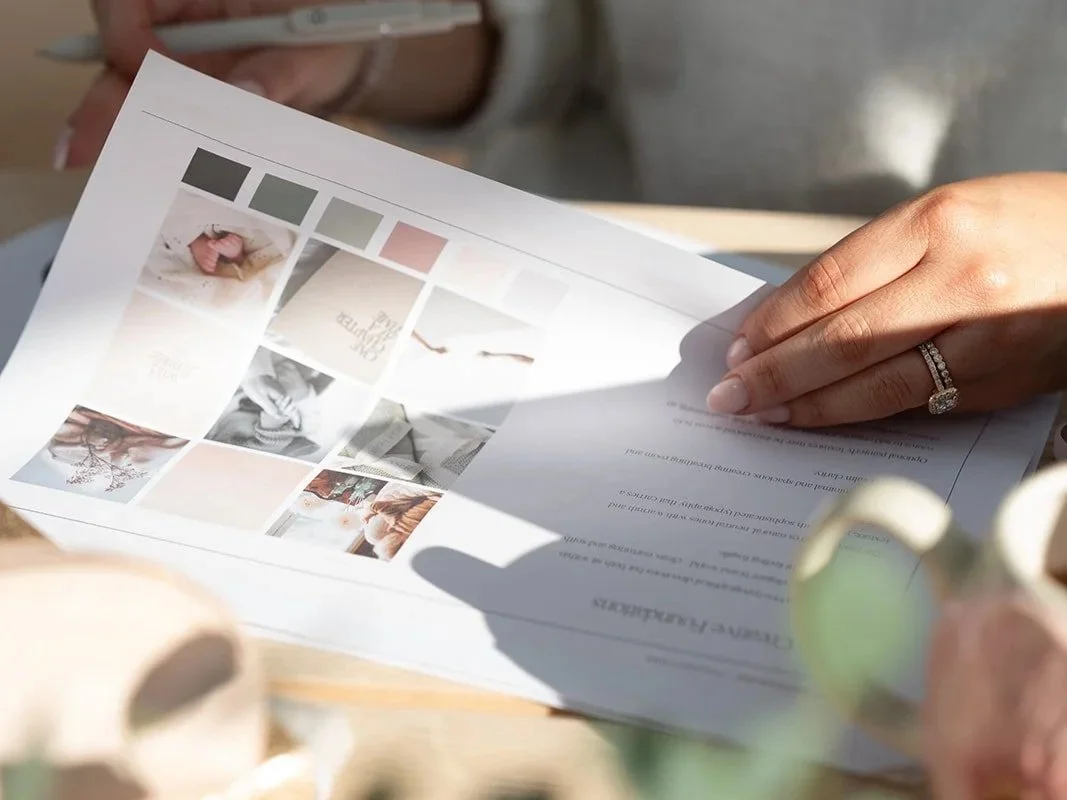
This is where many businesses trip up during a rebrand. So let's settle the argument once and for all: copy should always come before design. That means having the copy fully written before anything goes to a web designer (trust me, your webbie will thank you!).
Think of copywriting as the scaffolding for your visuals. When a copywriter builds your messaging, they aren't just writing words; they are strategically structuring the flow of information through headlines, subheaders, annotations, testimonials and the overall narrative arc. This hierarchy dictates how a user engages with your words and, more importantly, how the message lands.
Think about it like this: if you looked at a cereal box on a supermarket shelf and the cooking instructions took up the front panel while the product name and key ingredients were hidden on the back – would you buy it? Or would you move straight on to the next option? Realistically, you probably wouldn’t even pick it up. The same goes for your website. Copy is written to present information in a clear, compelling way, tapping into buyer psychology to engage attention, guide comprehension and steer decisions before a single pixel is placed.
Can design ever come before copy?
There is one exception to the rule here. When it comes to your brand identity, things are a little different. Your brand identity is the one exception that can lead the project, or ideally, run in tandem with messaging. Since both processes ask the same fundamental questions – who is your audience, what is your positioning, what makes you different? – they naturally inform one another.
Drawing from my experience as an in-house copywriter and as a copywriting business owner for over seven years, the most effective, memorable rebrands follow this specific order:
Brand Identity → Messaging → Copywriting → Website Design → Website Build
Get that order right, and everything else clicks into place (if you’re factoring in brand photography, ideally you’ll want this done somewhere after the middle of the process.)
Beautiful branding gets people through the door, but it also needs compelling messaging to make them stay for dinner. Get your messaging right first, and your beautiful branding finally has something worth showing off.
FAQs
-
You can, and plenty of people do. But there's a difference between putting some words on a website and finetuning a message that sells. Most people focus on the deliverables: here's what I do, here's how I do it etc. But those aren’t the sexy bit to a potential buyer. Your ideal client needs to hear about how your business relates to them, and they need to see how your expertise was earned. What's in it for me, and why should I care? And that’s hardto see when you’re inside of it all. A good copywriter brings that outside perspective plus the strategic structure that makes the whole thing convert. And before you say it: no, ChatGPT is not a shortcut. It simply cannot craft unique messaging. So, unless you’re OK with sounding like everyone else, you’ll want to nail down your personalised messaging foundations first.
-
Yes, especially if you're planning a refresh or noticing that your current site isn't converting the way you'd hoped. The order matters most when you're rebuilding, because going design-first and retrofitting copy is where things tend to go wrong. If you're getting traffic but not enquiries, attracting the wrong clients, or finding yourself unable to explain what you do without it sounding like ten other people in your industry – that's a messaging problem, not a design problem. Tweaking your fonts for the hundredth time won't fix it.
-
They're related, but they're doing different jobs. Your brand identity covers the visual and tonal elements: your logo, colours, fonts, the overall feel. Brand designers like Tamsin bring both a visual and strategic eye to the process – asking the same foundational questions about audience, positioning and differentiation before a single colour or font is chosen. Think it as the visual identity plus an early strategic layer that gives the whole brand its direction. Messaging then builds on that: going deeper into language and word choice, building out the core brand statements your copy hinges upon, defining how you're positioned in the market, and stating the case for why someone should choose you over everyone else offering similar things. Branding makes you recognisable. Messaging explains what you do and why someone should care.
-
A few signs: you're getting traffic but not enquiries; people visit your site and don't quite "get" what you do; you're attracting people who baulk at your prices; you find yourself rewriting your bio every three months because nothing feels quite right.
-
Not always; some brand designers work closely with copywriters and can recommend someone at the right stage – which is exactly why this kind of collaboration (hint, hint) tends to produce the strongest results. And many copywriters are also messaging strategists – but not all of them. I offer messaging strategy and website copywriting, btw :)
What you want to avoid is treating copy as the thing you panic-write into a template when your designer is chasing you for content. Copy leads. Design follows. Get that order right and the whole thing comes together like a charm.

Interested in hearing more from Emma (who is finding it weird writing this in the third person)? You can follow her at @emmagriffinwrites on Instagram, visit her website, or get her Feel Good Copy email series, showing you how to release the “shoulds” of copywriting and write well without rules.