Wellness Branding for Established Founders: When Your Brand No Longer Matches Your Business

Your business has grown, your offers are stronger and your clients are getting real, tangible results. You’re charging more than you used to - and people are paying it.
From the outside, things look good, but behind the scenes - there’s something that doesn’t quite sit right.
Your brand still feels like it belongs to an earlier version of your business.
When your wellness branding can’t keep up
This is something I see so often with established wellness founders.
It‘s an exciting time - their businesses are experiencing real momentum because they’ve evolved. They’re expanding their offers, they’ve got clients who love them and their work has really intensified. However, somewhere along the way on this exciting growth, the branding didn’t quite keep up.
So what you’re left with is a subtle, (but significant) gap between:
the level you’re operating at
and how your brand presents you
You and your clients know the wonderful depth of your work but when someone new lands on your website or Instagram, they’re not always seeing the full picture.
It’s not necessarily because your wellness branding is bad, but because it’s no longer built for the version of your business that exists now.

The hidden cost of “good enough” wellness branding
At this stage, it’s an alignment issue rather than a visibility issue.
This is because when your brand identity hasn’t caught up, it creates a kind of friction that shows up everywhere.
You might notice it as:
Clients who are interested, but not quite the right fit
Pushback on pricing
Enquiries that need more back-and-forth than they should
Sales conversations where you’re doing more explaining than expected
A website that feels “fine”… but doesn’t quite do you justice
It’s sometimes hard to identify because nothing is dramatically broken… but equally, nothing is working as easily as it could either.
I often think of this as the difference between a brand that is supporting your growth, and one that’s actually just slowing it down.

When you’ve outgrown your brand (but haven’t named it yet)
It’s not always obvious at first if you’ve outgrown your brand. It’s not as if the founders I work with come to me saying “My branding is the problem.”
Instead, what I hear more often is:
“I feel like my brand doesn’t fully represent what I do anymore.”
“I’ve evolved, but my business still looks the same.”
“I’m attracting clients… just not always the right ones.”
“I want to feel more confident sending people to my website.”
There’s often a sense of being slightly out of sync with your own business - like you’ve grown into something more refined and more experienced, but your brand is still introducing you as the version who was figuring things out.
What branding actually needs to do at this level
Branding at this stage of your business isn’t just about how things look, it’s about what your brand is doing for your business.
For established founders, your brand needs to:
Hold the full scope of your work
Whether you offer 1:1 coaching, a training app, group programmes or retreats - your brand should bring everything together into one clear, cohesive identity.
Communicate depth (without over-explaining)
Your audience should feel your level before you have to spell it out. That sense of trust, credibility and care should come through immediately.
Reflect your positioning
If your work is premium, high-touch or results-driven, your brand needs to support that. Otherwise, you end up relying on explaining everything instead of it being an automatic perception.
Make decisions easier for your clients
The right people should be able to recognise themselves in your brand, and feel confident taking the next step without needing everything unpacked for them.
This is the difference between having a brand and having a wellness brand identity that actively supports your growth.

Why this isn’t something you fix with small tweaks
At this point, it’s rarely about just changing a colour palette and updating your font, or rewriting a few lines of copy on your homepage. Of course, these things can help but alone they won’t close that gap.
This is because the shift that you need isn’t just a visual thing, it’s a strategy thing.
The important parts start with actually repositioning your brand around who you are now. With that comes aligning your identity with your current offers (and future proofing for what’s to come) - this will create a level of clarity that removes any of those friction points we talked about earlier.
(All this requires a different level of thinking than most wellness branding advice online is built for.)
What this looks like in practice
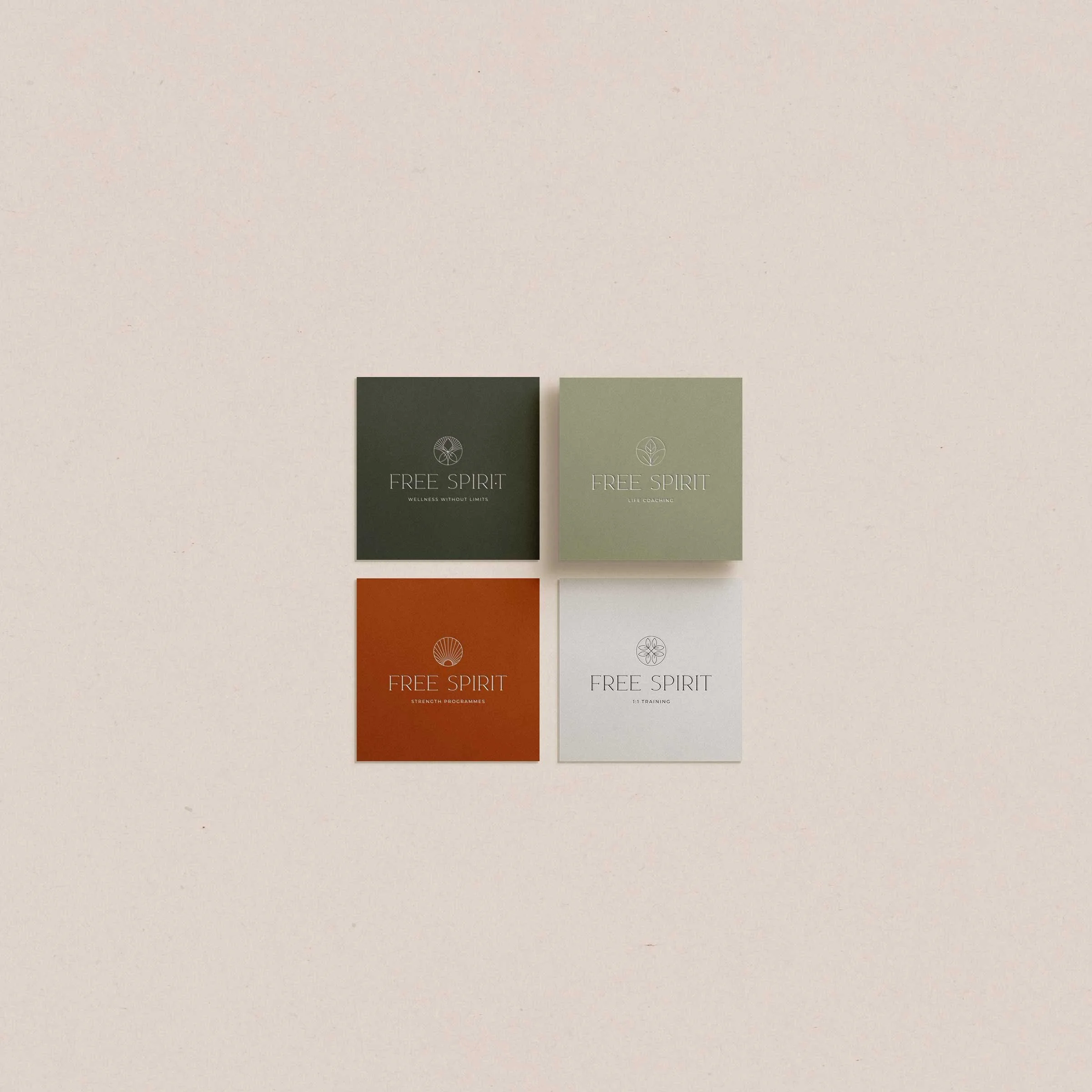
Recently, I worked on a wellness branding project for a business that offered strength training, yoga and life coaching. On paper, everything was there - strong offers, real client results and a really clear sense of purpose
But, the brand wasn’t holding it all together because each part of the business felt slightly disconnected. The visual identity didn’t reflect the depth of the work and the overall impression didn’t match the level the founder was operating at.
So, our focus wasn’t just on making things “look better.” It was about creating a wellness brand identity that could unify multiple offers under one clear direction and position the brand as both premium and deeply human.
The result was a brand that finally felt like it matched the business behind it, and made everything from messaging to marketing feel more straightforward.

What shifts when your brand catches up
When your branding is aligned with your business, you feel it almost immediately.
What happens is that the right clients recognise the value more quickly because your messaging feels clearer.
You spend less time explaining (and more time doing the work you actually love!) Your brand starts working with you, not against you
So where does this leave you?
If you’re reading this and something is resonating - you can feel that your brand no longer reflects the level you’re operating at - it doesn’t mean you’ve done anything wrong.
More often than not, it just means your business has grown faster than your brand has been able to keep up (which is bloody great news!)
The question isn’t:
“Do I need better branding?”
It’s:
“Is my brand built for the business I’m running now - and the one I’m growing into?”
(Because those are two very different things.)
A final thought
Branding for your wellness business isn’t just about creating something that looks calm, elevated or cohesive. At this level, it’s about creating a brand that can communicate your value clearly and support the next stage of your business, without you having to constantly fill in the gaps.
And when that happens, everything else tends to follow.
If this sounds like something you need, then I’d love to support you.